Soil Testing Step-by-Step Guide
Soil testing is the most cost-effective way to optimize crop yields, protect groundwater, and avoid wasting money on unnecessary fertilizer. The N.C. Department of Agriculture and Consumer Services (NCDA&CS) Agronomic Division processes all samples. Follow these four simple steps to get your soil tested.
1. Pick Up Testing Supplies
Stop by the Martin County Extension Center during normal business hours (Monday - Friday 8:00 am - 5:00 pm) to pick up free soil sample boxes and submission forms. Staff members will be able to assist you in getting supplies.
2. Collect & Prepare Your Soil Sample
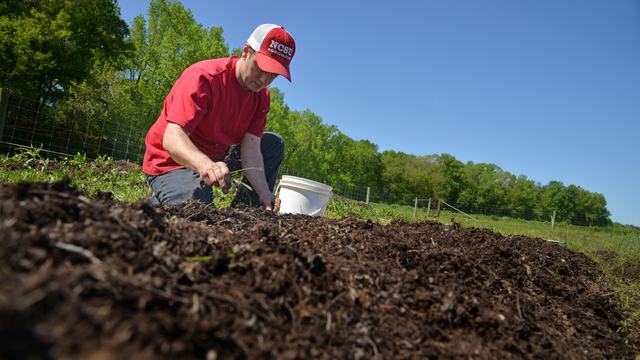
- Use Clean Tools: Use a stainless steel soil probe or clean trowel and a plastic bucket (avoid metal or brass buckets, which alter zinc/copper readings).
- Sample Depth: Take soil cores down to 4-6 inches for lawns, pastures, and gardens, or 6-8 inches for tilled agricultural fields.
- Mix Samples: Take 10-15 small cores from across a uniform area (one field or one garden patch), combine them thoroughly in your bucket, and fill your soil box to the red line.
- Dry Before Packing: Never send wet soil. Air-dry wet samples on paper towels at room temperature before filling the box.
Complete the NCDA&CS Form
- Sample Identification: Create a unique 4-character ID (FLD1, FRONT, LAWN) for each box and write it on both the box and the form.
- Crop Codes: Enter the correct 3-digit crop code listed on the back of the form (Corn, Soy, Lawn) so the lab provides tailored lime and fertilizer recommendations.
Submit & Pay Lab Fees
- Peak Season Fee Notice: NCDA&CS charges $5.00 per sample for samples received between November 26 and March 31. samples received between April 1 and November 25 are FREE.
- Drop-Off Options:
- Direct Mail: Ship your boxed samples directly to the NCDA&CS Agronomic Lab in Raleigh using the address listed on the form.
- County Drop-Off: Bring sealed boxes and completed forms to the Martin County Office.
- Access Results: Test results are typically available online in 1-3 weeks (up to 4-6 weeks during peak winter season) at the NCDA&CS PALS Portal.
Need help reading your report? Once your PALS report generates, the number for Index Values (P-I, K-I) and Target pH can be tricky. Bring your results by our office or email it to our Agriculture Agent, Lance Grimes at lance_grimes@ncsu.edu, and we'll write a customized lime and fertilizer plan for your acreage.